
The Annual Mary Lou Fulton Mentored Research Conference showcases some of the best student research from the College of Family, Home, and Social Sciences. The mentored learning program encourages undergraduate students to participate in hands-on and practical research under the direction of a faculty member. Students create these posters as an aide in presenting the results of their research to the public, faculty, and their peers.
If you are submitting your poster, please do so via the Submit Research link in the left sidebar on this page, and not on the main Submit Research page.




















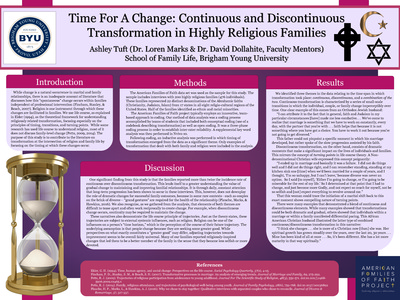
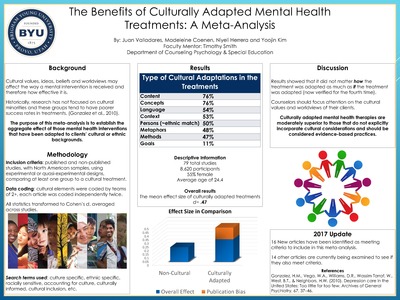
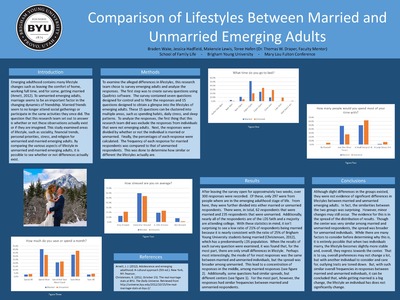
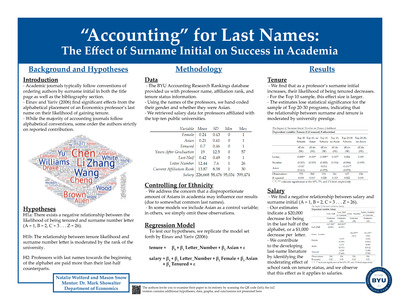
-

Community religious adherence is a poor predictor of poverty rates– except in Utah and Idaho
Connor B. Biser
Fourth Place Becoming BYU - BYU 150 category, Mary Lou Fulton Mentored Student Research Conference 2026
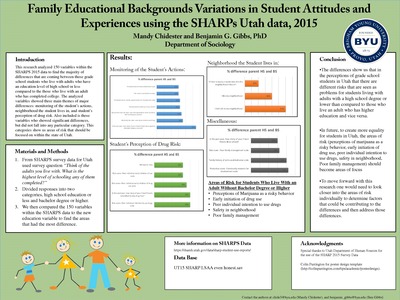
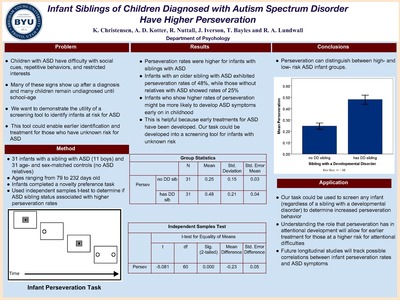
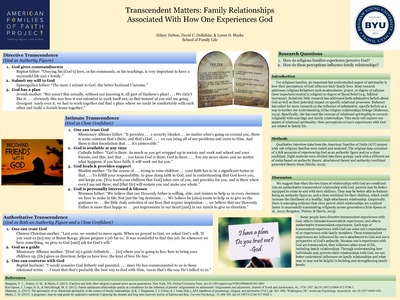
Previous research has shown variable correlations between religious adherence and socioeconomic standing at the family and individual scales. Utah and Idaho are predominantly LDS—a faith which emphasizes and enables education and self-sufficiency through educational and material resources made available to the membership. We assessed the correlation between poverty rates and religious adherence rates at the county-level and compared national trends to those present in Utah and Idaho. We found a weak positive correlation between poverty and religious adherence rates nationally, but a moderate negative correlation in Utah and Idaho. Though these data do not establish a causative relationship; they suggest an interesting avenue for future study assessing the factors that may result in reduced poverty rates at the community level.
-

From Crown to Communism to Crown: Reconstruction in Budapest's Castle District reveals how heritage is selectively rebuilt to shape national identity
Risae Carlson and Daniel Olsen
This project examines how reconstruction in Budapest’s Buda Castle District shapes perceptions of authenticity and historical memory. Following World War II destruction and socialist rebuilding, post-1989 reconstruction has emphasized a return to imperial-era aesthetics. Using visual and historical analysis, this study shows how different political periods have reshaped the same space to reflect shifting cultural priorities. While the district appears historically cohesive, many structures are reconstructed rather than preserved. This creates tension with UNESCO’s standards of authenticity and integrity. The findings suggest that reconstruction does not simply restore the past but actively reshapes it by prioritizing certain narratives while downplaying others, ultimately influencing how visitors understand history.
-

How Far Is Too Far? Travel Planning Burdens in Autism Families
Risae Carlson, Daniel Olsen, and Ruth Kerry
This study examines how the burden of planning and risk management influences travel distance and destination choice among families with a child on the autism spectrum. Survey data from Utah-based parents indicate that higher planning burden is associated with a preference for familiar, closer-to-home destinations and shorter travel distances. Despite these constraints, families report that travel remains highly valuable for bonding, fostering a sense of normalcy, and supporting developmental growth.
-

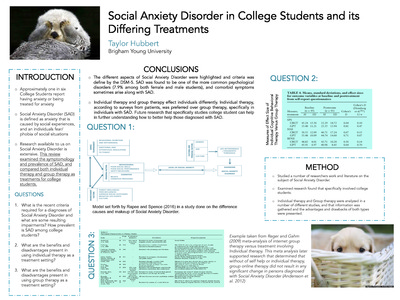
Motivation vs. Negative Feelings Among Individuals with Autism Spectrum Disorder and Social Anxiety
Jakob Carver and Eden Ordyna
This study examines how motivation relates to negative emotional experiences across three groups: individuals with autism, individuals with social anxiety, and a control group. As shown in Figure 1, higher motivation is associated with lower levels of negative feelings across all groups, indicating a consistent inverse relationship.
Baseline differences are evident, with individuals with social anxiety reporting the highest negative feelings, followed by those with autism, and the control group reporting the lowest. While all groups show similar downward trends as motivation increases, the reduction appears most pronounced in the control group. In contrast, individuals with autism and social anxiety continue to report relatively higher negative feelings even at high motivation levels.
These findings suggest that although motivation is linked to improved emotional outcomes overall, its effectiveness may vary depending on underlying psychological conditions. The data that was used was pulled from a study trying to identify suicide predictors. Further research is needed to better understand these differences and inform targeted interventions for suicide among these groups.
-

What is Love? Baby Don't Hurt Me, Don't Hurt Me, No More
Sydney H. Crockett
Is love a choice? A literature review demonstrated that love and behavior are inextricably linked, and one’s choices influence the development of love, suggesting it could be a choice. Interviews demonstrated that the assumption that love is a choice was baked into almost every respondent’s behavior, providing merit to the conclusion.
-

The 12-Week Silence: A Scrollytelling Investigation into Early Pregnancy Loss and the Case for Continuous Progesterone Monitoring
Audrey Gold
Opens with the scale of the problem (up to 1M miscarriages annually, all in the most data-poor window of pregnancy), describes the methodology (2 original surveys, 4 clinical interviews, peer-reviewed literature), walks through what the piece does visually (the distribution curve, the blind-spot timeline, the 5-phase progesterone chart, the intervention pathway), and closes with the central argument — that the silence is a gap in technology, not an inevitability.
-

Nature Nearby: Use of Green Spaces Mediating the Relationship Between Access to Green Spaces and Health
Sydney P. Goodson
Access to green spaces has been consistently linked to improved physical and mental health, yet the mechanisms driving this relationship remain underexplored, particularly in the United States. Using data from the 2018 General Social Survey (N = 1,045), this study examines whether time spent in natural environments mediates the relationship between access to green spaces and self‑rated physical and mental health. Linear regression models with robust standard errors reveal that time spent in natural environments mediates the relationship between access to green spaces and both health outcomes. These findings suggest that proximity to green spaces alone is insufficient to produce health benefits; rather, regular use of these spaces is critical. The results have important implications for urban planning and public health policy, emphasizing the need to design and promote green spaces in ways that encourage sustained engagement.
-

FHSS Collaborations: Departmental Cohesion and Inter-Departmental Ties
Sydney P. Goodson, Alexandra Williams, Aaron Hunter, and Salem Hansen
This project analyzes patterns of faculty collaboration within the College of Family, Home, and Social Sciences (FHSS) at BYU using social network analysis of co-authorship data. As part of this research, we compiled data from Google Scholar on the 216 publishing faculty members within FHSS and their co-authorship connections. The study evaluates both internal cohesion and inter-departmental collaboration. Key measures include clustering coefficients to assess within-department cohesion, and degree and strength to capture the breadth and volume of collaborations across departments. Findings indicate that departments such as Sociology, School of Family Life, and Geography exhibit relatively high internal cohesion, suggesting tightly connected research communities. Notably, Sociology, School of Family Life, and Psychology demonstrate high levels of inter-departmental collaboration, positioning them as central “bridges” within the broader FHSS network. Analysis of external ties shows that departments with a higher number of external collaborations tend to also have a wider range of unique collaborators outside of one’s department, indicating a positive relationship between collaboration volume and breadth. Overall, the study highlights meaningful variation in how departments vary in internal cohesion and external engagement. These patterns provide unique insight into the structure of academic collaboration within FHSS.
-

Blessing or Burden?: Parental Religiosity and LGBTQ Adolescent Well-Being
Emma S. Griffitts, Lindsey Maner, and Adam Rogers
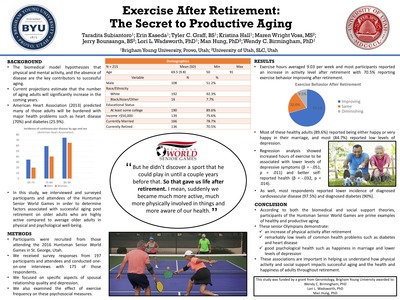
This study investigated the associations between parent religiosity and their LGBTQ teen's psychological risk and resilience factors. LGBTQ youth showed higher risk factors, but parent religiosity also predicted greater resilience, mediated by child religiosity. These effects were stronger among LGBTQ teens than non-LGBTQ teens, suggesting that their internalized faith may lead to increased coping and well-being in minority contexts.
-

Maternal Age and Income Moderate the Effects of Infant Sleep Interventions on Maternal Sleep and Mood
Rachel Kerr, Afton Craig, and Kara McRae Duraccio
Introduction: Demographic and social factors, including maternal age, number of children, and income, may influence the success of sleep training approaches for infants based on differences in supports available and varying levels of maternal self-efficacy/confidence. This study investigated whether maternal income, age, and number of children moderated the effect of three infant behavioral sleep interventions on maternal sleep and mental health.
Methods: Mothers of infants (ages 5-10 months) were randomly assigned to basic sleep hygiene control, graduated extinction, or responsive parenting interventions to help improve the sleep of their infant. Mothers completed the Pittsburgh Sleep Quality Index, PROMIS Sleep Disturbance Short Form, Edinburgh Postpartum Depression Scale, and the Postpartum Specific Anxiety Scale at baseline and following the two-week intervention implementation period. Repeated-measures general-linear-models were conducted to evaluate change in maternal sleep/mental health over time while evaluating the between-subject factor of experimental condition; additional between-subject factors included maternal age, income, and number of children.
Results: Fifty-nine mothers (M age=27.2(4.10); M income=68,152.42(SD=54044.30); 100% female; 85% White) and their infants (M age=6.87 months (SD=1.62); 54% female) completed the study. Among lower-income mothers, responsive parenting and graduated extinction significantly reduced depression symptoms compared to control (p=.016 and .042, respectively); income did not moderate improvements on maternal sleep quality, sleep disturbance, or anxiety (p>0.05). Maternal age moderated rates of improvement in sleep disturbance over time (p=.042), where younger mothers receiving responsive parenting experienced greater reduction of sleep disturbance (compared to the other sleep conditions). Similar trends were noted in improvement in depression (p=.052), with younger mothers experiencing the greatest rate of improvement following responsive intervention. Number of children did not moderate treatment response for maternal sleep quality, sleep disturbance, depression, and anxiety (p>0.05).
Conclusions: Mothers who are younger and of lower income may experience greater benefits in sleep and mood when engaging in a responsive-parenting sleep intervention compared to more traditional graduated extinction methods or sleep hygiene approaches. These findings may reflect differences in maternal self-efficacy or tolerance with distress in these populations. Future research should evaluate how parental confidence, caregiving beliefs, and perceived feasibility serve as mechanisms that underly these differential intervention responses.
-

Language and Emotional Experience: A Worldwide Study
Natalie Lorange and Chelsea Romney
This qualitative study explored how native language influences emotional experience. Fourteen participants from diverse countries were recruited to capture a range of linguistic perspectives and experiences. Data were analyzed using thematic analysis, resulting in four key themes: (1) shared experience as central in creating emotional meaning, (2) the power of words in shaping emotional experience, (3) stronger emotional resonance in native or frequently used languages, and (4) the importance of regional differences in emotional experience. Findings suggest that while emotions may be largely universal, linguistic and cultural differences play a significant role in an individual's emotional identity. The study highlights the potential to expand emodiversity through engagement with multiple languages. There are also important implications for therapeutic techniques, as emotional experience varies across languages.
-

Babies and Borders: Political Determinants of Population Policies in the European Union
Lauren A. McHenry
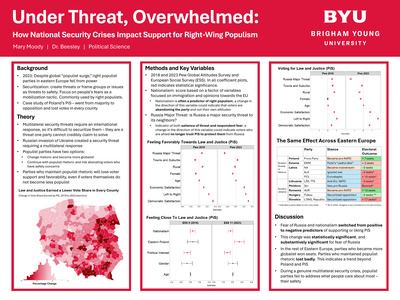
This research examines the political conditions under which pronatalist policy and restrictive immigration policy are implemented. Using the Nationalism Populism Database and World Population Review data, I classify different countries based on levels of populism and nationalism and determine countries’ levels of immigration restriction and pronatalism. I use a Most Similar Systems Design case study to compare the different policy outcomes of Spain and Italy. I find that populism is predictive of immigration restriction, while nationalism is predictive of pronatalist policy.
-

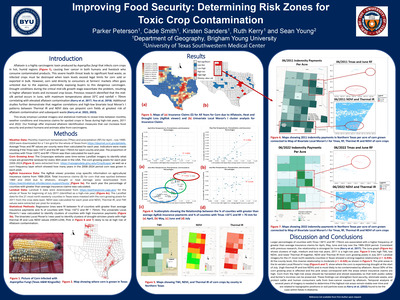
Critical Minerals in a Critical Time
Parker J. Peterson, Sophia Budge, and Brooks Miner
This study evaluates U.S. positioning in rare earth mineral (REM) supply chains by analyzing global mine concentrations and trade alignments. While the U.S. ranks second in production, its critical vulnerability lies in processing, where China controls 60–80% of global capacity. Strategic investment and allied partnerships are essential for long-term supply chain resilience.
-

Breaking the Ice: The Effects of Climate on Arctic Accessibility & Strategic Capability
Parker J. Peterson, Frank DeVito, and Alex Guglielmo
Arctic sea ice has declined steadily since 1978, reshaping global shipping routes, military postures, and indigenous communities. Reduced ice extent expands access to the Northern Sea Route and Arctic resources while correlating with increased military activity. These changes accelerate economic opportunity but outpace governance, threatening Indigenous wellbeing and regional stability.
-

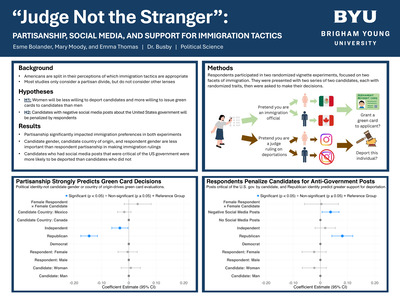
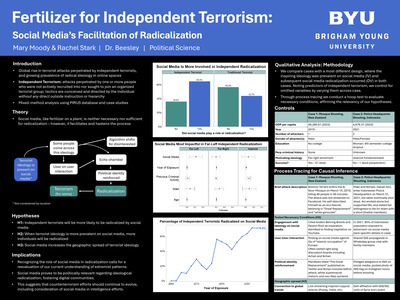
More of the Same? Measuring Donald Trump's Populism in the 2024 Presidential Campaign
Ryan Rajasooriar and Kirk Hawkins
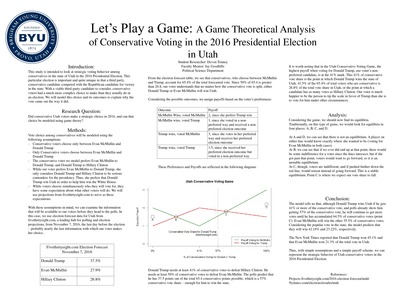
This research analyzes whether Donald Trump increased his populist rhetoric in the 2024 presidential campaign in comparison to 2016. Using a holistic coding rubric, we had three trained coders analyze 25 campaign speeches and 2 debates, using a 0-2 scale and creating sub-scores for anti-elitism and people-centrism.
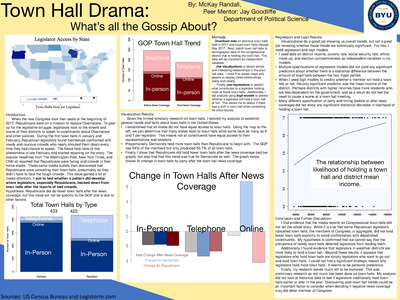
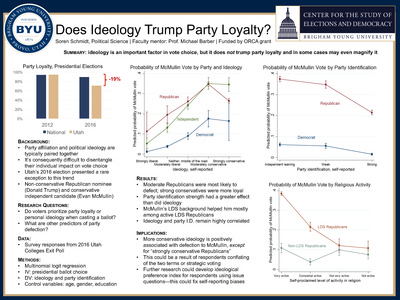
The results show no statistically significant increase in overall populism( 2016 Avg = 0.8 vs. 1.0 Avg in 2024. Trump's rhetoric is consistently "half-populist", reflecting a strong leaning towards anti-elitist speech but weaker or erratic amount of people-centrism. Usually a populist will emphasize the people as the "glorified will" of the country. However, Trump strays from this by usually glorifying himself as the people's "representative".
The findings would strongly suggest that Trump has continued on the half-populism trend in 2024 he started in 2016 rather than change. However, this is highly context dependent as his populist rhetoric changes usually between rallies and debates.
-

Beyond Displacement: AI-Related Job Loss and Time to Re-Employment
Megan E. Williams and Eric Dahlin
This study examines whether workers who lose jobs to AI experience longer unemployment than those displaced for other reasons. Using OLS regression with demographic and occupational controls, results show that, on average, AI-displaced workers find new employment slightly faster. Although these differences are not statistically significant, they suggest AI-related job loss may not uniquely affect reemployment.
-

Asking the Right Questions: How Parent Question Type Shapes Children's Emotion Label Use Across Early Childhood
Ashton Allen and Peter J. Reschke
Parent questions facilitate children's emotion label learning during parent–child conversations (Ruba et al., 2022), yet limited research has examined how different question types influence this process. Parent–child dyads (N = 296, 136 girls) were observed discussing a picture book depicting self-conscious emotions (shame, guilt, embarrassment, awe, pride) annually for five years starting at age 2. Parent-child conversations were transcribed and the frequencies of parent yes/no questions, parent open-ended questions, child emotion labels, and total word count were coded from transcriptions (mean interrater reliability ICC = .90). Five separate regression models (one per wave) predicting children’s emotion labels revealed significant effects of question type. Specifically, parent yes/no questions negatively predicted child emotion labeling at Wave 1, 𝛽 = -.21, SE = .07, t = -2.94, p = .004, Wave 2, 𝛽 = -.16, SE = .08, t = -2.08, p = .04, Wave 3, 𝛽 = -.23, SE = .07, t = -3.30, p = .001, and Wave 4, 𝛽 = -.30, SE = .11, t = -2.70, p = .009. Conversely, parent open-ended questions positively predicted child emotion labeling at Wave 2, 𝛽 = .28, SE = .08, t = 3.49, p < .001, Wave 3, 𝛽 = .26, SE = .07, t = 3.72, p < .001, and Wave 4, 𝛽 = .43, SE = .11, t = 3.98, p < .001. These findings highlight the role of question type in shaping children’s emotion language. Implications for parent–child interactions, early emotion socialization, and applications in practical settings will be discussed.
-

Talking Shame with Boys & Girls: How Gender Shapes Parent–Child Conversations About Self-Conscious Emotions
Ashton Allen, Peter J. Reschke, and Jocelyn Wikle
This study examines how child gender predicts parents’ use of emotion labels during a storybook task. Prior research suggests that parents may socialize emotions differently based on child gender, potentially shaping children’s emotional development. However, limited work has specifically examined gender differences in parent emotion labeling, particularly within the context of self-conscious emotions. The study utilized a sample of parent–child dyads (N = 95) from the 2023 wave of Project M.E.D.I.A., a longitudinal dataset analyzing parent emotion labeling during a shared storybook task. OLS regression models were employed to examine the association between child gender and parents’ use of emotion labels while controlling for conversation length, child vocabulary, child affective knowledge, and demographic characteristics. Findings indicate that parents used more emotion labels when discussing shame with daughters than with sons. Parents were also more likely to use emotion labels for shame while talking to their daughters when the picture depicted a boy. These results suggest that parents may engage in gendered emotion socialization, which could contribute to differences in children’s emotional competencies over time. Understanding gendered patterns in parent emotion talk can inform future research on emotional development and interventions aimed at fostering balanced emotion socialization across genders.
-
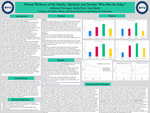
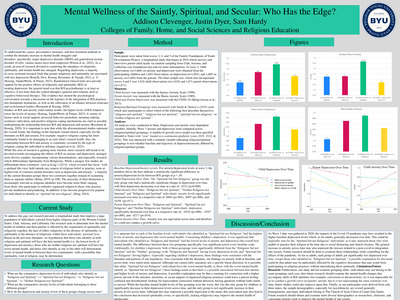
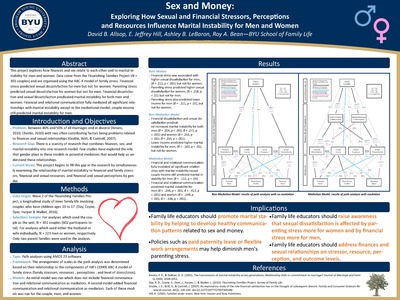
Mental Wellness of the Saintly, Spiritual, and Secular: Who Has the Edge?
Addison Clevenger, Justin Dyer, and Sam Hardy
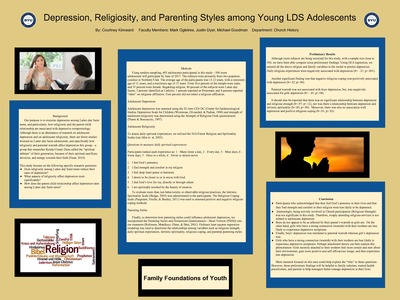
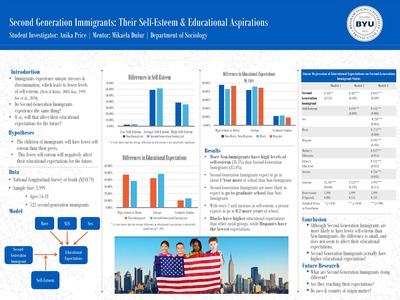
This study examines the relationship between religious/spiritual identity and depression and anxiety levels at comparative baseline levels, and then longitudinally. Gathered from The Family Foundations of Youth Development Project, this study samples parent-child dyads from highly religious parts of the Western United States to determine how the mental health of these individuals is affected by the conjunction of spirituality and religiosity, the lack of either, or one divorced from the other. Results revealed that at baseline levels, participants across all groups who identified as “Spiritual but not Religious” had the highest levels of anxiety and depression, and children who identified as “Religious and Spiritual” had the lowest levels of depression. The difference between the “Religious and Spiritual” identity and the “Spiritual but not Religious” identity, specifically, was significant across every baseline scale. Results indicated that while the baseline mental health levels of the “Spiritual but not Religious” groupings were the worst, this was the only group of children to significantly decrease in their depression levels, and the only group to not significantly increase in their anxiety levels, across time. Regarding adults, each group got significantly less depressed over time, except those who identified as “Religious but not Spiritual.” Like the area of research broadly, the results of this study are nuanced. This paper explains the study’s procedures and results, and offers possible interpretations, intending to alleviate suffering and encourage flourishing by identifying causal and protective factors for mental illness as it relates to religiosity and spirituality.
-
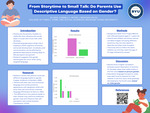
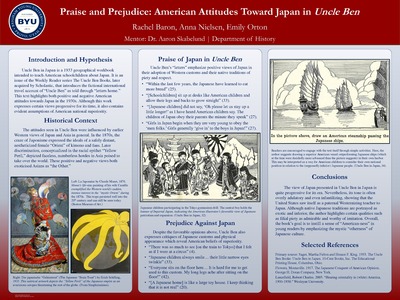
From Story Time to Small Talk: Do Parents Use Descriptive Language Based on Gender?
Alyssa C. Connelly
This study examines whether parents use descriptive language differently based on gender using a wordless story book between the parent and child. Findings indicate that parents use more emotion-based language when describing female picture gender and more verb-based language for boy children. These results show ways in which gendered language may shape early self-perception and interests.
-

Supercomputing the Brain: A Computational Pipeline For Lateralization Analysis
David B. Grigg, Laetner Fischbeck, Adam Fox, Madeline Peterson, and Jared Nielsen
Lateralization refers to the organization of cognitive processes between the right and left hemispheres of the brain. While lateralization varies by sex, handedness, and neurodivergence, consistent analysis across large datasets is a computational challenge. To address this, we developed a high-performance computational pipeline that converts raw fMRI data into standardized information for large-scale statistical analysis.
-
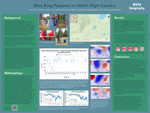
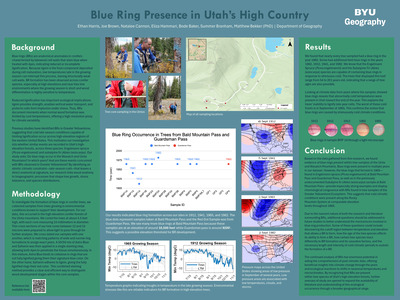
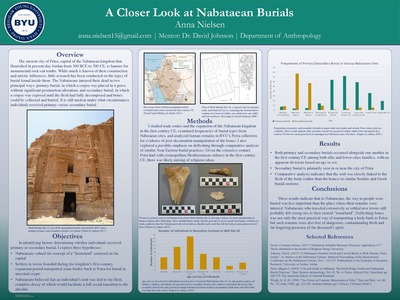
Blue Ring Presence in Utah's High Country
Eliza Hammari, Bode Baker, Summer Branham, Ethan Harris, Joe Brown, and Natalee Cannon
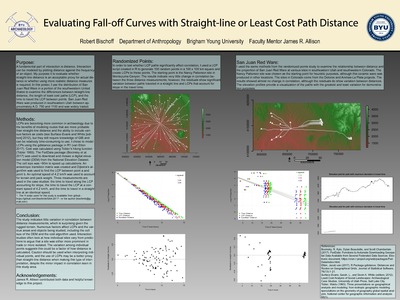
Blue rings are incompletely lignified tree rings resulting from cold environmental stress in the late growing season. We identified blue rings in samples from the Uinta and Wasatch Mountains, matching previous samples in the Greater Yellowstone Ecosystem. These blue rings are helpful in building comprehension of past climatic data.
-
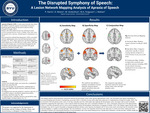
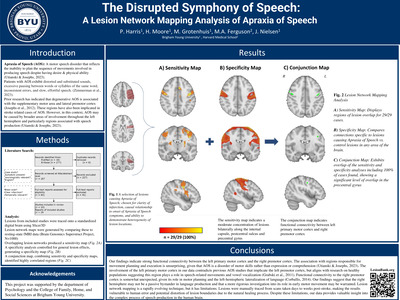
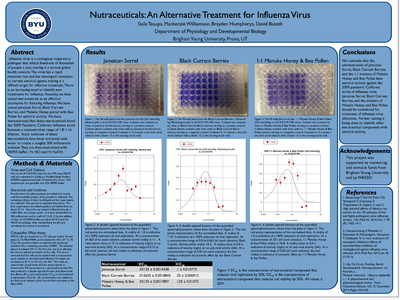
The Disrupted Symphony of Speech: A Lesion Network Mapping Analysis of Apraxia of Speech
Payton Harris, Harrison Moore, Milija Grotenhuis, Jared Nielsen, and Michael A. Ferguson
Apraxia of Speech (AOS) is a motor speech disorder that causes difficulty planning and coordinating the movements necessary for speech. This study uses lesion network mapping to identify the neural connections of AOS by tracing lesion data and analyzing their functional connectivity patterns. Our data indicates strong connectivity between the left primary motor cortex and right premotor cortex. The findings of the left primary motor cortex differ from most AOS research but still correlate with regional functions found in healthy populations. However, results related to the right motor cortex were much less expected, and suggested a larger, understudied role in the disorder. These results gave insights into AOS mechanisms, and will better inform future research.
-

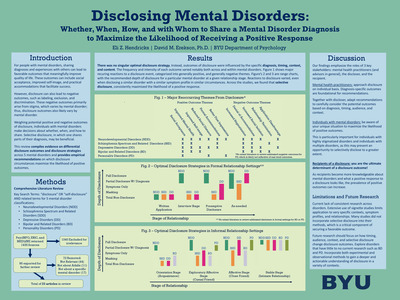
Disclosing Mental Disorders: Whether, When, How, and with Whom to Share a Mental Disorder Diagnosis to Maximize the Likelihood of Receiving a Positive Response
Eli Z. Hendricks
Individuals with mental disorders face complex decisions about whether, when, how, and to whom they disclose their diagnosis. Disclosure is significant because it can lead to both substantial positive and negative outcomes. This review examined how disclosure outcomes differ across five major classifications of mental disorders. Through a search of three academic databases, 23 relevant articles were identified and analyzed. Findings indicate that both the likelihood and type of disclosure outcomes vary considerably by diagnosis. Furthermore, the optimal disclosure strategy, which maximizes the likelihood of positive outcomes, is unique for each disorder. The optimal timing, context, and audience are also unique for each disorder. Implications for mental health practitioners, individuals with mental disorders, and the public are discussed to support more positive disclosure outcomes. Finally, limitations are acknowledged, and areas for future research are proposed.
-
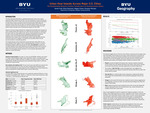
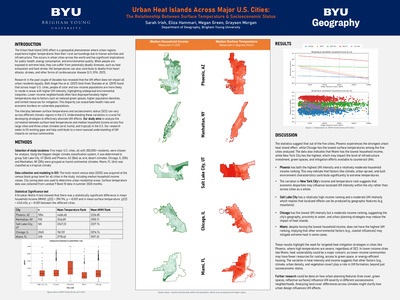
Urban Heat Islands Across Major U.S. Cities: The Relationship Between Surface Temperature & Socioeconomic Status
Sarah Irish, Eliza Hammari, and Megan Green
The urban heat island (UHI) effect is a geospatial phenomenon prevalent across major U.S. cities which has significant implications for public health, energy consumption, and environmental quality. To better understand the impacts of UHI on various communities, we analyzed the correlation between surface heat temperatures and median household income across five large cities and three urban climates (arid, humid, and tropical) in the U.S.. We gathered data from the U.S. Census Bureau and other sources to create maps using ArcGIS Pro. Based on the maps and statistical analysis, UHI intensity is correlated with socioeconomic status. Further research is recommended to better understand the other aspects affecting UHI intensity and to develop better strategies for UHI mitigation.