
The Annual Mary Lou Fulton Mentored Research Conference showcases some of the best student research from the College of Family, Home, and Social Sciences. The mentored learning program encourages undergraduate students to participate in hands-on and practical research under the direction of a faculty member. Students create these posters as an aide in presenting the results of their research to the public, faculty, and their peers.
If you are submitting your poster, please do so via the Submit Research link in the left sidebar on this page, and not on the main Submit Research page.





























-
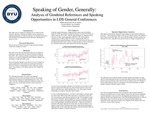
Speaking of Gender, Generally: Analysis of Gendered References and Speaking Opportunities in LDS General Conferences
Devon Tenney
This study seeks to examine the changing role of women in LDS General Conferences. Through text analysis and an exploration of speaking opportunities at General Conference, we find that women have been discussed more frequently and provided more opportunities to speak over time.
-
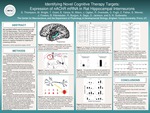
Identifying Novel Cognitive Therapy Targets: Expression of nAChR mRNA in Rat Hippocampal Interneurons
Spencer Thompson, Maxwell Wright, Taylor Grant, Brady Vance, Nicholas Ahern, Jeffrey Ogden, Romaine Drecketts, David Pugh, Zach Fisher, Sara Werner, Jaron Fowlers, Bradley Klienstuber, Richard Burgon, Ashley Sego, Doris Jackson, and Sterling N. Sudweeks
We quantified mRNA subunit expression in the CA1 rat hippocampus. The a3 and B2 nAChR subunits are the highest expressed mRNA subunits while the a4 is the least. Current nAChR targeted cognitive therapies focus on the a4B2 and a7 nAChRs. These results provide a new avenue in cognitive therapies by targeting a3 containing nAChRs.
-

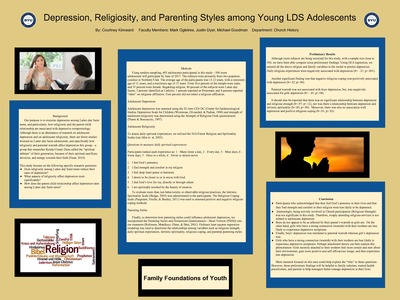
Time For A Change: Continuous and Discontinuous Transformation in Highly Religious Families
Ashley Tuft
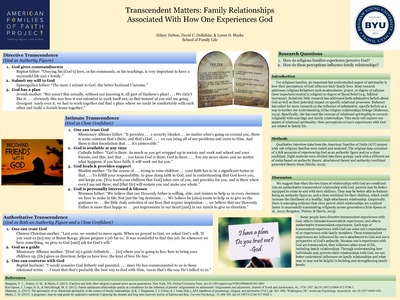
While change is a natural occurrence in marital and family relationships, there is an inadequate amount of literature that discusses how this “spontaneous” change occurs within families independent of professional intervention (Fincham, Stanley, & Beach, 2007). Religion is one instrument through which these changes are facilitated in families. We use life course, as explained in Elder (1994), as the theoretical framework for understanding religiously related transformation, focusing especially on the principles of timing, transitions, and turning points. While some research has used life course to understand religion, most of it does not discuss family-level change (Petts, 2009, 2014). The purpose of this study is to contribute to the literature on transformation at the intersection of religion and family life by focusing on the timing at which these changes occur.
-

The Benefits of Culturally Adapted Mental Health Treatments: A Meta-Analysis
Juan Valladares, Madeleine Coenen, Niyeli Herrera, and Yoojin Kim
Cultural values, ideas, beliefs and word views may affect the way a mental intervention is received and therefore how effective it is. Historically, research has not focused on cultural minorities and these groups tend to have poorer success rates in treatments (Gonzalez et al., 2010). The purpose of this meta-analysis is to establish the aggregate effect of those mental health interventions that have been adapted to clients' cultural or ethnic backgrounds.
-
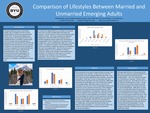
Comparison of Lifestyles Between Married and Unmarried Emerging Adults
Braden Wake, Jessica Hadfield, Makenzie Lewis, and Toree Hafen
Emerging adulthood contains many lifestyle changes such as leaving the comfort of home, working full time, and for some, getting married (Arnett, 2012). To unmarried emerging adults, marriage seems to be an important factor in the changing dynamics of friendship. Married friends seem to no longer attend social gatherings or participate in the same activities they once did. The question that this research team set out to answer is whether or not these observations actually exist or if they are imagined. This study examined areas of lifestyle, such as sociality, financial trends, personal priorities, stress, and religion for unmarried and married emerging adults. By comparing the various aspects of lifestyle in unmarried and married emerging adults, it is possible to see whether or not differences actually exist.
-

"Accounting" for Last Names: The Effect of Surname Initial on Success in Academia
Natalie Wolford and Mason Snow
- Academic journals typically follow conventions of ordering authors by surname initial in both the title page as well as the bibliography section.
- Einav and Yariv (2006) find significant effects from the alphabetical placement of an Economics professor’s last name on their likelihood of gaining tenure.
- While the majority of accounting journals follow alphabetical conventions, some order the authors strictly on reported contribution.
-

Expectations and Memory: Positive and Negative Expectations of Memorizing the Armenian Alphabet
Micah Wood and Madeline Hoyt
Studies suggest that expectations may have an effect on various cognitive functions, including memory. To this point, no studies have exclusively investigated the effect of expectations on short-term memory. This study tested the effect of positive and negative expectations on short-term memory, utilizing the Armenian alphabet as a test of memory. N=45 undergraduate students (23 men, 22 women), ranging in age from 18-26 years were divided equally into three groups: Group 1 was a control group, Group 2 was manipulated to have positive expectations before testing, and Group 3 was manipulated to have negative expectations before testing. All groups were given three minutes to study 18 Armenian letters and their English-letter counterparts. Participants were then given two minutes to write the correct English letter next to each Armenian equivalent. A single-factor ANOVA comparing averages between groups showed non-significant results (p= .15).
-
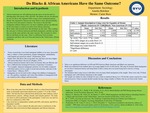
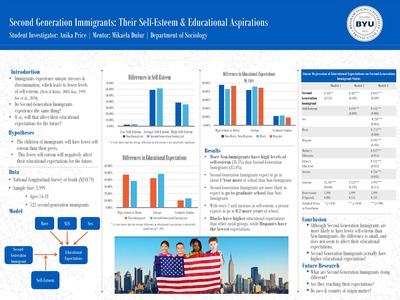
Do all Blacks & African Americans Have the Same Outcome?
Amelia F. Belchior
Do blacks and African Americans have the same outcome in terms of self-esteem, GPA, and SEC? Those who are aware of black history and understand the civil rights movement have higher self-esteem. Those blacks who accept their skin color and apply the self-fulling prophesy of what black is know to be, they have higher self-esteem as well. Black immigrants are more likely to accept their skin color and not associate blackness with living in the ghetto, being good at playing sports and dancing; they are more likely to have have self-esteem than native born African-Americans.
-
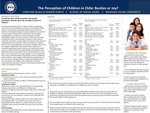
The Perception of Children in Chile: Burden or Joy?
Christine W. Black and Renata Forste
Globally, family values and behaviors have been shifting. This can be seen through a decrease in the universality of marriage, increased individualism, higher prevalence of divorce, older age at marriage and low birthrates with an increase in planned and controlled fertility. In Latin America, and specifically in Chile, these types of changes have been the most drastic. Data come from the ISSP where about 1,500 Chilean participants were asked a series of questions regarding family and gender attitudes as well as multiple demographic questions. This study looked at how these attitudes contributed to the perceived burden or joy of children. Results found that individuals who have sufficient resources and value the homemaker role see children as life’s greatest joy.
-
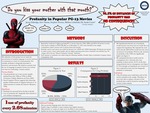
"Do You Kiss Your Mother With That Mouth?": Profanity in Popular PG-13 Movies
Jason Eldredge, Stephen M. Trotter, Kirt Haynie, and Melissa Littlefield
Exposure to profanity in the media is a concern shared by many. Profanity is often portrayed as humorous and/or innocent. A content analysis of popular PG-13 movies from the 1990s to the present shows the use of profanity is regularly portrayed as having no consequence. The overall amount of profanity in PG-13 movies has decreased since the 1990s.
-
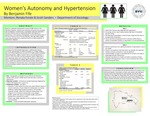
Women's Autonomy and Hypertension
Benjamin J. Fife
Based on a nationally representative sample of women in the Dominican Republic, I examine how the amount of autonomy predicts the development of hypertension. Using logistic regression techniques for a sample of 4,869 women, I find that in the presence of demographic controls autonomy does not significantly predict the diagnosis of hypertension. In the case of women in the Dominican Republic, older age, higher weight, lower wealth, urban living and distance to a healthcare facility are better predictors of hypertension.
-
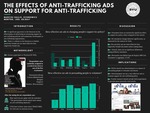
The Effects of Anti-Trafficking Ads on Support for Anti-Trafficking
Marcos Gallo
A significant gap exists in the literature on the effectiveness of advertising on increasing support for anti-trafficking policies and community involvement in anti-trafficking organizations. Addressing this current gap, I developed and ran an experiment with approximately 1000 individuals in Chiang Mai, Thailand, a site of high concentration for anti-trafficking NGOs. I investigated the effects of advertisements that use religion, cultural values and national identity. Initial findings indicate that these ads do not affect policy support but bear a positive effect on individuals’ personal involvement with anti-trafficking organizations. Further results suggest that using pro-sociality as a strategy is more effective than using negative rhetoric, adding more insight to this debate in the social marketing literature.
-

Maoist Women Voices
Marcos Gallo, Amber Bullock, Scott Sweeten, Stéfanie J. Morris, and Joshua D. Sims
Mao Zedong, the leader of China's communist revolution, promised liberation from exploitation for all, including for women. However, government inefficacy and social inertia impeded meaningful change. Women in Communist China under the rule of Mao Zedong found their voice through civic activity because communist reform policies failed to instate gender equality.
-
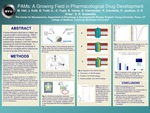
PAMs: A Growing Field in Pharmacological Drug Development
Marcel Hall, J. Kolb, B. Todd Jr., D. Pugh, B. Vance, B. Klienstuber, R. Drecketts, Doris Jackson, H. R. Arias, and S. N. Sudweeks
Positive Allosteric Modulators (PAMs) are a growing field in pharmacology. PAM-5 and genisteincause acetylcholine (ACh) to elicit larger currents on nicotinic acetylcholine receptors (nAChRs) without activating the channel themselves. In effect, PAMs increase the amplitude of currents at a synapse without altering the normal firing rate of the neurons.
-
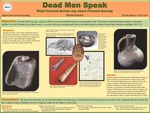
Dead Men Speak: What Fremont Burials say about Fremont Society
Rachel Hansen
This project examined Fremont burials to determine whether the Fremont were a rank society. Because the data show that there are not elaborate burials with many grave goods the Fremont did not have rank differences in social status. It appears that the Fremont did have specialized ritual leaders (shamans).
-

Explaining Demographic Differences in Marital Quality: The Role of Mental and Physical Health
Kara Henderson, Jessica Harris, Spencer Young, and Spencer James
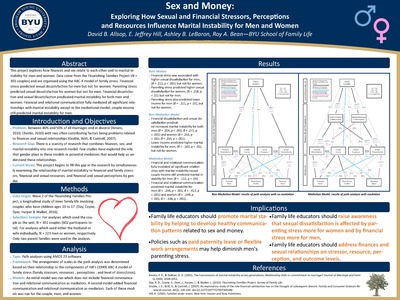
A vast body of literature has measured the demographic differences in marital quality. According to literature on marriage, the poorly educated, females, racial ethnic minorities, and premarital cohabitors report less marital satisfaction. The main focus and goal of our study is to link the various demographic differences with poor marital quality. Much of the research on marital quality has found a link between physical health and marital outcomes. The current research neglects the other factors of mental and physical health are related to marital satisfaction and conflict. We want to observe how mental and physical health may serve as mediators and as a link to demographic characteristics.
-
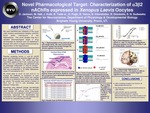
Novel Pharmacological Target: Characterization of a3b2 nAChRs expressed in Xenopus Laevis Oocytes
Doris Jackson, Marcel Hall, J. Kolb, B. Todd Jr., D. Pugh, B. Vance, B. Klienstuber, R. Drecketts, and S. N. Sudweeks
We have identified two subtypes of the novel a3b2 nicotinic acetylcholine receptor (nAChR) found within interneurons of the hippocampus. This novel receptor may be a valuable pharmacological target in drug development for disease such as Alzheimer’s disease (AD) which is largely characterized by degeneration of the hippocampus.
-
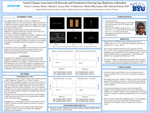
Neural Changes Associated with Rewards and Punishment Following Ego Depletion or Boredom
Travis Z. Johnson, Michael Larson, Marina Milyavskaya, and Michael Inzlicht
Our brain power is exhaustible. We are constantly trying to find ways to perform at our highest levels. There has been research that has shown that willpower--the capacity to exert self-control--is a limited resource that is depleted after exertion of the brain. Many studies have shown the negative effect that depletion has on daily decisions. Depletion can influence our day-to-day choices and actions in a variety of important ways. The neural mechanisms for ego-depletion are relatively unknown so our purpose is to measure the effects of ego-depletion, and then test ways that it can be decreased or reversed, thus finding a way to improve the negative effects of depletion.
-
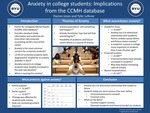
Anxiety in college students: Implications from the CCMH database
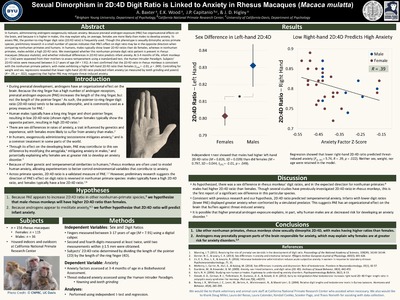
Payton Jones and G. Tyler Lefevor
In 2013, an unprecedented 12.4% of college students were diagnosed or received treatment for an anxiety disorder. Using the Collegiate Center for Mental Health (CCMH) database, which includes data from over 140 university counseling centers, we analyzed covariates of anxiety concerns and the implications of these findings. We found that academic and financial concerns correlate highly with anxiety in college students, suggesting that the recent increase in college student anxiety may mirror the increases seen in the cost and importance of university education over the last few decades.
-
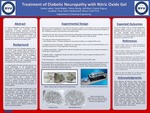
Treatment of Diabetic Neuropathy with Nitric Oxide Gel
Daniel R. Lathen, David Walton, Yukino Strong, Jeff Ward, Conner Sugrue, Jonathan Trout, Devin Vanderwood, and Alonzo Cook Ph.D.
Our study investigates a novel therapy to address a vascular factor that contributes to the development of diabetic peripheral neuropathy (DPN) using five experimental groups of a mouse model that spontaneously develops diabetes. The compound under investigation is a nitric oxide (NO)-donating topical gel which has potential as a treatment for preventing and treating DPN.
-
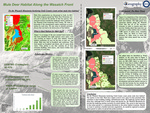
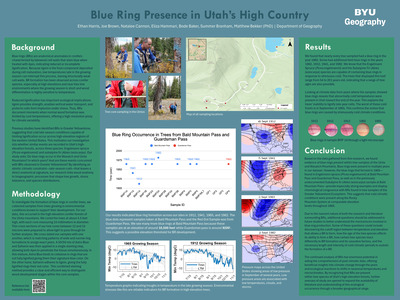
Mule Deer Habitat Along the Wasatch Front
Aaron J. Snow, Brad Halsey, Mike Smith, and Kaytee Howell
Mule deer are prominent ruminants across the Northwestern United States. Their sensitive biology makes their habitat hard to come by. Their habitat requires adequate bedding, cover, feeding ground, and close access to water year round. To avoid high winds, low temperatures and heavy snowfall, the winter months often require mule deer to descend from their high elevation homes to the lower elevation valley, particularly in search of food and water. Descending into the valley often means intersecting with urban sprawl. We primarily want to see if the Wasatch Mountains in Utah County provide adequate mule deer habitat and secondly see if it intersects with urban regions.
-
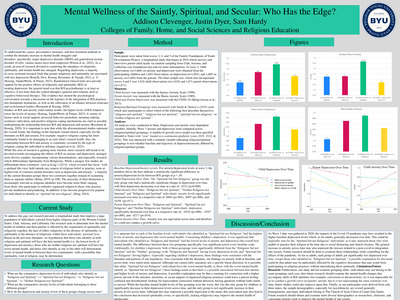
Popular Music: Sexually Saturated? A Content Analysis of Sexual References in Popular Music
Meghan Terry, Mariah Ramage, Crystal Gardner, Jessica Van Alfen, and Emilee Gregson
Adolescents and young adults listen to 2-3 hours of music per day. The sexual content of that music is important to identify formation and how they perceive sex and relationships, and genre of music can influence lyrics. This paper analyzes the effect that genre has on both presence and attitude of sexual references in popular music. The sample consisted of 200 of the best-selling songs on iTunes. Results suggest a significant relationship between both genre and presence of sexual references and genre and attitudes toward sex. This study shows that sexual content is prevalent in popular music and could suggest that the lyrics we listen to can impact the way we perceive the world.
-
Putting Arens to the Test
Tyler A. Balli, Justin Cannon, Blake Brailsford, Aubrey Kartchner, and Hallie Johnson
For our History 202 class, Professor Larsen assigned us to read excerpts from William E. Arens' book called The Man-Eating Myth. The premise of Arens' book is that all of the instances of one group accusing the other of cannibalism are fabricated. If one digs deeply enough, they will not find reliable first hand accounts of cannibalism. Professor Larsen encouraged us to pick a society that was accused of cannibalism and to investigate whether or not the accusations were valid or not. After researching our group came to the conclusion that Arens was wrong in the case of the Maori. There is so much evidence to support that the Maori were indeed cannibals. However we did come to find that Maori cannibalism had been grossly exaggerated and therefore believed to be more widespread and frequent than it probably was in reality. Our poster depicts that the practice of cannibalism did indeed occur amongst the Maori, but that it had been exaggerated by European missionaries and explorers.
-
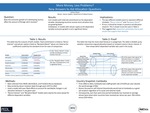
More Money, Less Problems? New Answers to Aid Allocation Questions
Jackson Beazer
I wanted to investigate how the economic growth of developing countries affects the amount of aid it receives. In a study of the models previously used in aid allocation research, I noticed that the literature alternates between aid per capita and total commitment amounts as the dependent variable. After trying both, I found that economic growth is significant in the aid allocation models, but not in the aid per capita models. I hypothesized that while aid per capita models embody an individual focus on the needs of the recipient country, total aid allocation models embody more of a focus on overall donor strategy. In order to support this theory, I categorized the previous aid allocation studies by their main argument of aid allocation ("donor interest" or "recipient need") and the dependent variables they used. The literature matched up very cleanly with my theory. This not only suggests a new way to measure the allocation of aid, but potentially means that researchers have been cherry-picking results to support their hypotheses in this area of study.
-
Connecting to Disconnect: Internet Access and Loss of Trust in Pre-Arab Spring Egypt
Rolf David Dixon Jr.
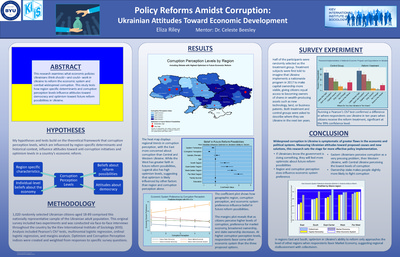
Research has shown that seeking out and deliberating with like-minded individuals can contribute to the fragmentation and polarization of societies. The study posits that the internet can contributes to just such like-minded reinforcement, via a phenomenon called the echo chamber effect. An analysis of the World Values Survey of Egypt in 2001 supports the claim that the internet can contribute to fragmentation and polarization, as measured by a lack of trust. The analysis shows that access to the Internet, even as early as 2001, with the limited penetration it had in in Egypt at that time, still had a measurable, significant effect on national unity as measured by trust for neighbors.